Contents
Law firms often treat legal practice management software and case management as interchangeable concepts, even though they serve different operational functions. Case management focuses on the administration of individual legal matters, including documents, deadlines, communications, and the procedural integrity of each file. Legal practice management, by contrast, governs the broader business of the firm: client intake, billing, trust accounting, compliance, and the systems that support firm-wide operations.
The cost of conflating these functions is measurable. According to the Thomson Reuters Law Firm Business Leaders Report published in 2024, firms with fragmented technology stacks lose an average of $40,000 per attorney annually in unbilled or under-captured time. The American Bar Association’s 2023 data further indicates that one in three attorneys identifies administrative inefficiency as the primary source of professional stress.
What follows is an examination of both matter-level and firm-level legal practice management. The risks arise when those functions run on disconnected systems. The focus is strictly on the administrative and technological role in which these decisions are made.
How Fragmented Legal Technology Is Costing Firms
Law firms do not lose efficiency because they lack software. They lose it because core functions like matter work, billing, and client communication often run on disconnected systems. When case management and legal practice management are split across separate tools, the result is predictable: slower billing, weaker oversight, and a fragmented client experience.
The Terminology Trap
The problem presents itself in a scenario familiar to most mid-sized practices. A paralegal spends the morning updating a matter file in the case management system, logging client communications, appending evidence, and ensuring the file is litigation-ready. The billing attorney, working in a separate accounting platform, records time and expenses against the same matter. Neither system has visibility into the other.
The case management tool holds the narrative of the work. The practice management tool holds the financial record. Without a shared data layer between them, the firm is exposed to three compounding risks:
- Time leakage. Attorneys switching between platforms to log billable activity routinely fail to capture incremental time, including brief calls, short email exchanges, and document reviews. Individually minor, these omissions accumulate into a material annual loss.
- Data duplication. The same client record is created, updated, and maintained independently in each system. Every redundant entry is a vector for inconsistency, and inconsistency in a client file is a professional liability.
- Audit fragmentation. When communications, billing records, and matter updates exist across separate systems, producing a coherent audit trail for a regulatory review, a fee dispute, or a malpractice inquiry requires manual reconciliation across platforms that were never designed to align.
The Quantified Cost
According to the Thomson Reuters Law Firm Business Leaders Report (2024), firms operating fragmented technology stacks lose an average of $40,000 per attorney annually in unbilled or under-captured time. That figure becomes more significant when set against recent billing trends. Firms increased their agreed hourly rates by more than six percent in 2023, yet realisation rates did not improve proportionally. The revenue gained through higher rates is being offset by the inefficiency of the systems used to track and collect them.
The consequences extend beyond the balance sheet. The American Bar Association (2023) reports that one in three attorneys identifies administrative inefficiency as the primary source of professional stress. Fifty-six percent of lawyers report disrupted sleep and fifty-five percent report chronic anxiety. Burnout rates among junior attorneys reach fifty-eight percent. These figures are not simply the product of demanding caseloads. They reflect the cumulative friction of low-value administrative work, including duplicate data entry, manual reconciliation, and the cognitive load of maintaining coherence across disconnected systems.

The Strategic Implication
The distinction between case management and legal practice management is functionally real and analytically important. The error is not in recognising it. The error is in accepting the gap between them as an operational constant.
Firms that have consolidated onto unified platforms, where matter-level and firm-level data share a single source of truth, grow revenue at a rate four times faster than their headcount. The median lockup period for firms running fragmented systems, the combined window between work performed, invoicing, and collection, stands at ninety-seven days. That figure represents a cash flow liability that no rate increase can fully absorb.
| Metric | Figure |
| Annual revenue loss per attorney | $40,000 |
| Attorneys citing admin inefficiency as primary stressor | 33% |
| Median realisation lockup | 38 days |
| Median collection lockup | 45 days |
| Total median lockup, fragmented firms | 97 days |
How What Case Management Works
Case management is the matter-level operating layer of a law firm. It governs the work performed within a single legal matter, from intake and engagement readiness through final disposition and file closure. Its function is to ensure that legal work is executed in a controlled and defensible manner.
The organising principle is matter-centricity. Every document, task, deadline, and communication should be tied to the matter record. That structure preserves chronology, supports evidentiary integrity, and gives the legal team a complete history of the file.
Without that structure, the matter record loses coherence. Emails, filings, drafts, text messages, evidence, and internal notes may all exist, but they do not form a reliable file unless they are captured within a single matter-centred system.
Core Controls
Effective case management usually depends on four connected controls:
- document assembly and drafting workflows linked to the matter file
- deadline tracking, task sequencing, and automated alerts
- matter-linked communications and evidentiary history
- Integrated conflict checking at intake
Together, these functions govern how legal work is produced, reviewed, and preserved throughout the matter lifecycle.
Operational Value
Legal document workflow requires more than storage. It requires repeatable production through templates, clause libraries, court forms, version control, and assembly logic tied directly to the matter record. Thomson Reuters describes legal document automation as a process in which users answer structured questions, and the system generates documents from templates rather than rebuilding them from the beginning. As one example of how this model is applied, RunSensible states that it provides access to more than 54,000 pre-built court forms across jurisdictions, reducing routine manual entry in filing workflows.
Deadline control is equally important. Legal work is governed by court schedules, filing obligations, and statutes of limitations that cannot be managed reliably through passive calendaring alone. A mature case management system treats deadlines as operational constraints. It structures tasks around those deadlines and surfaces risk early enough to reduce avoidable failure.
The same standard applies to communications. A reliable matter file must show what the client communicated, what the firm advised, what opposing counsel produced, what the court required, and what the firm did in response. If those records are dispersed across inboxes, phone logs, text threads, and external tools, the file no longer functions as a dependable professional record.
Risk Control
The case for case management is not limited to efficiency. It is also a matter of governance and risk control. Missed deadlines remain a persistent source of malpractice exposure, including missed statutes of limitation. Conflict checking is often the first professional obligation triggered before substantive work begins.
If either process depends on disconnected systems or duplicated data entry, the integrity of the matter file is weakened at the outset. Case management should therefore be understood not as an administrative convenience, but as the operating discipline that allows a firm to demonstrate what it knew, what it did, when it acted, and how the matter was managed.
Practice Management as the Firm’s Operating System
Practice management is the firm-level operating layer of a law firm. It governs how the business functions as an organisation, focusing on client acquisition, financial control, operational continuity, and compliance. Where case management manages the work inside a matter, practice management manages the systems that allow the firm to sustain that work profitably and responsibly.
Its governing principle is business continuity. A firm cannot operate effectively if it cannot convert enquiries into retained matters, capture time accurately, issue invoices promptly, manage client funds properly, or monitor financial performance. Practice management treats each matter not only as legal work to be completed, but as work that must be billed, collected, supervised, and reported within the firm’s broader operating model.
Operating Functions
Effective practice management typically includes four connected functions:
- legal CRM and structured intake workflows
- time recording and invoice generation
- IOLTA-compliant trust accounting
- business analytics and KPI reporting
These functions govern the business side of legal practice. They determine how work enters the firm, how revenue is captured, and how leadership monitors performance.
Legal CRM and intake workflows begin before a matter is opened. They manage the lead-to-client pipeline, structure early data collection, and improve the consistency of onboarding. This is where practice management first shapes conversion, responsiveness, and data quality.
Time recording and invoice generation sit at the centre of the revenue cycle. If time is not captured accurately, it cannot be billed. If bills are delayed or inconsistently produced, cash flow suffers regardless of the quality of the underlying legal work. Practice management systems are designed to reduce that slippage by connecting time capture directly to billing workflows.
Trust accounting is equally important. Managing client funds is one of the most regulated parts of legal operations. Practice management systems support this function by providing dedicated trust accounting controls, maintaining separation between client and firm funds, and generating records that can withstand audit and bar review.
Business analytics completes the picture. Firm leadership requires more than raw accounting data. It requires a clear view of utilisation, realisation, collection, receivables, and intake performance. Practice management systems provide visibility through firm-wide dashboards and reporting tools.
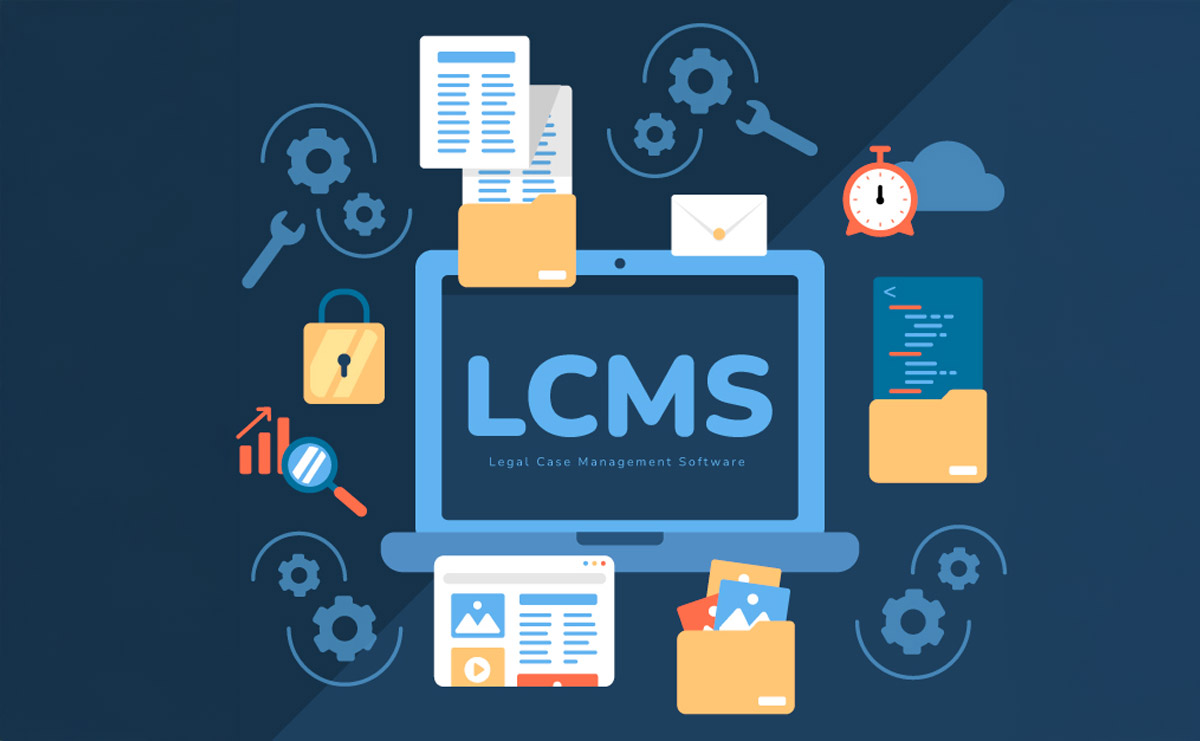
A New Era of Legal Practice: Leveraging Technology for Operational Excellence Legal Case Management Software
Revenue Performance
The financial case for practice management is measurable. Legal industry expert found that firms using dedicated practice management platforms collect invoices an average of 13 days faster than firms relying on more general accounting tools. The same report found that billing workflows such as automated email billing were associated with stronger realisation outcomes, with rates reaching 91% compared with 73% in less optimised environments.
A useful way to understand this is through lockup, which refers to revenue that remains tied up in the firm instead of being converted into cash. In practice, this usually reflects delays between work being completed, bills being issued, and payments being received. When lockup remains high, the problem is rarely limited to finance alone. It usually points to operational weakness in time capture, billing discipline, follow-up, or payment processing.
This is where practice management becomes operationally important. A strong system shortens the distance between legal work and revenue by connecting recorded time, invoicing, collections, and reporting in one workflow. The result is not only faster payment. It is stronger cash flow, better financial visibility, and less revenue left sitting unbilled or unpaid.
Compliance and Security
Practice management also governs a large part of the firm’s compliance perimeter. Every additional software vendor introduced into the operating environment adds another set of credentials, another permissions model, another contract, and another potential point of exposure.
A fragmented stack creates a corresponding governance burden. Separate systems for intake, billing, communications, storage, and payments increase the number of environments that must be reviewed, secured, and monitored. In the event of a data incident, that fragmentation also complicates coordination, audit response, and breach-notification workflows.
A more unified practice management environment reduces that burden. It narrows the number of systems handling sensitive operational data and makes access control, audit logging, and oversight more manageable for firm leadership.
Performance Indicators
A practical way to assess practice management performance is to track a small number of firm-level indicators:
- realisation rate
- collection rate
- lockup period
- invoice cycle time
- trust accounting compliance status
- billable time captured
Together, these measures show whether the firm’s business systems are supporting legal work effectively. Practice management, in that sense, is not ancillary to the practice of law. It is the operating framework that allows the firm to convert legal work into stable revenue, maintain financial discipline, and manage risk at scale.
Why Separate Systems Create Operational Gaps
Once a firm runs case management and legal practice management as separate systems, it creates a predictable evidentiary gap. The issue is not simply technical fragmentation. It is that the firm no longer has one authoritative record capable of supporting operations, billing, compliance, and client service at the same time.
The first problem is duplication without authority. When client and matter records exist in more than one system, the firm must either tolerate inconsistency or devote time to reconciling records across platforms. Neither outcome serves the client. One weakens data integrity. The other consumes administrative effort that produces no substantive legal value.
The second problem is that integration work is itself an operational burden. ILTA has long reflected the practical reality that software integration requires ongoing effort to maintain compatibility across systems, permissions, and versions without disrupting the wider environment. For law firms, the implication is straightforward. Each additional system added to solve a narrow problem often creates new work elsewhere in authentication, reporting, training, permissions management, and troubleshooting.
The third problem is client experience. A fragmented back end produces fragmented service. When a client asks for the status of a matter, the answer should be visible from one authoritative file. If the answer must be assembled from a case file, an email thread, a billing system, and a payment portal, then the firm is relying on staff memory and manual coordination rather than system design.
The distinction becomes clearer when viewed in operational terms:
- Case management is designed to answer what must happen next in the matter: deadlines, tasks, filings, and evidentiary chronology.
- Legal practice management is designed to answer how the firm captures, bills, and governs that work: time, realisation, collections, trust accounting, and firm-level reporting.
- A unified platform is what connects those two layers, so that matter activity and business activity draw from the same record rather than parallel systems.
That distinction matters because modern firm leadership does not need one category of answer at a time. Managing partners need to know what work is outstanding, what has been completed, what is billable, whether the file is compliant, and how the matter is performing financially. No single layer can answer that full set of questions on its own.

The cost of the gap is measurable and significant, the 15% of administrator time lost to tool management. RunSensible closes each of these gaps across the full matter lifecycle, allowing you to focus on the practice of law while the platform manages the business of law. Schedule a Demo Today!
Final Thoughts
The distinction between case management and legal practice management is clear. One governs the execution of legal work within the matter. The other governs the business systems that allow that work to be billed, collected, supervised, and sustained. Both are essential. Neither is sufficient on its own.
The operational problem begins when firms treat these functions as separate environments rather than connected layers of the same operating model. Once matter data, communications, billing, and compliance records are spread across disconnected systems, the firm loses the benefit of a single authoritative record. That is where inefficiency becomes structural rather than incidental.

For managing partners and legal operations leaders, the practical question is no longer whether both functions are necessary. It is whether the firm’s current systems allow them to work from the same dataset, support the same workflows, and produce the same defensible record. If they do not, the cost appears in delayed billing, fragmented oversight, and avoidable governance exposure.
Modern firms do not need more software categories. They need stronger operational continuity across the full matter lifecycle. That is the standard against which any legal technology stack should now be judged.
FAQs
1. What is the difference between case management and legal practice management?
Case management governs the work of a single matter. It covers documents, deadlines, communications, evidence history, and conflict checks tied to the file. Legal practice management governs the business side of the firm, including intake, time capture, billing, trust accounting, and performance reporting. In simple terms, case management manages the matter, while legal practice management manages the firm around that matter.
2. Why is case management so important at the matter level?
Case management creates control within the file. It ensures that documents are generated consistently, deadlines are tracked properly, communications are preserved in context, and conflict checks are performed against reliable records. Without that structure, the matter file may contain information, but it will not function as a dependable professional record.
3. What does legal practice management software actually improve?
Legal practice management improves the firm’s operational and financial control. It helps firms manage intake, record billable time, generate invoices, monitor collections, maintain trust accounting discipline, and track firm-wide KPIs such as utilisation, realisation, and cash flow. Its value lies in making the business of law more visible, more consistent, and easier to govern.
4. Why is it a problem to run case management and practice management on separate systems?
When the two layers are disconnected, firms create duplication, reconciliation work, and reporting gaps. The same client or matter may exist in multiple places, communications may sit outside the billing workflow, and financial data may no longer align cleanly with matter activity. That separation creates operational drag and weakens the firm’s ability to rely on one authoritative record.
5. How does fragmentation affect revenue and compliance?
Fragmentation affects revenue by slowing the path from completed work to recorded time, from recorded time to issued invoices, and from invoices to payment. It affects compliance by spreading sensitive firm and client data across multiple systems, each with its own permissions, contracts, and audit requirements. The result is often delayed billing, weaker oversight, and a broader compliance perimeter.
6. What should firms look for in a unified legal platform?
A unified platform should connect Matterwork and firm operations without forcing the firm to re-enter or reconcile the same data across systems. That means matter-linked documents, communications, deadlines, billing, reporting, and trust accounting should all operate from the same underlying record. The goal is not simply convenience. It is operational continuity across the full matter lifecycle.
References
-
- American Bar Association. Rule 1.7: Conflict of Interest: Current Clients. Available at: https://www.americanbar.org/groups/professional_responsibility/publications/model_rules_of_professional_conduct/rule_1_7_conflict_of_interest_current_clients/
- Oklahoma Bar Association. Thoughts on Legal Document Automation. Available at: https://www.okbar.org/lpt_articles/thoughts-on-legal-document-automation/
- PR Newswire. RunSensible Introduces AI Platform With 54,000+ Court/Legal Forms to Automate Legal Work by 70%. Available at: https://www.prnewswire.com/news-releases/runsensible-introduces-ai-platform-with-54-000-courtlegal-forms-to-automate-legal-work-by-70-302526018.html
- Lawyers Mutual. Missed Deadlines Are Top Cause of Legal Malpractice. Available at: https://lawyersmutualnc.com/article/missed-deadlines-are-top-cause-of-legal-malpractice/
- The State Bar of California. Client Trust Accounting & IOLTA. Available at: https://www.calbar.ca.gov/legal-professionals/maintaining-compliance/client-trust-accounting-iolta
- U.S. Department of Health & Human Services. Breach Notification Rule. Available at: https://www.hhs.gov/hipaa/for-professionals/breach-notification/index.html
Disclaimer: The content provided on this blog is for informational purposes only and does not constitute legal, financial, or professional advice.